
Why are Olympic medals breaking? Will they be fixed for Paralympics?
CORTINA D’AMPEZZO, Italy — Alpine skier Breezy Johnson pulled her Olympic gold medal out of her front right coat pocket. Ribbonless.
“Don’t jump in them,’ she said during her press conference Feb. 8 after winning gold in the downhill. ‘I was jumping in excitement, and it broke. I’m sure somebody will fix it. It’s not crazy broken, but a little broken.”
Johnson was the first, followed by figure skater Alyssa Liu, Swedish cross‑country skier Ebba Andersson, Dutch skater Jutta Leerdam and German biathlete Justus Strelow. Alpine team combined bronze medalist Jackie Wiles had her medal come apart as well, but her boyfriend found a way to repair it. Curlers Cory Thiesse and Korey Dropkin said they’re sleeping with their medals to protect them.
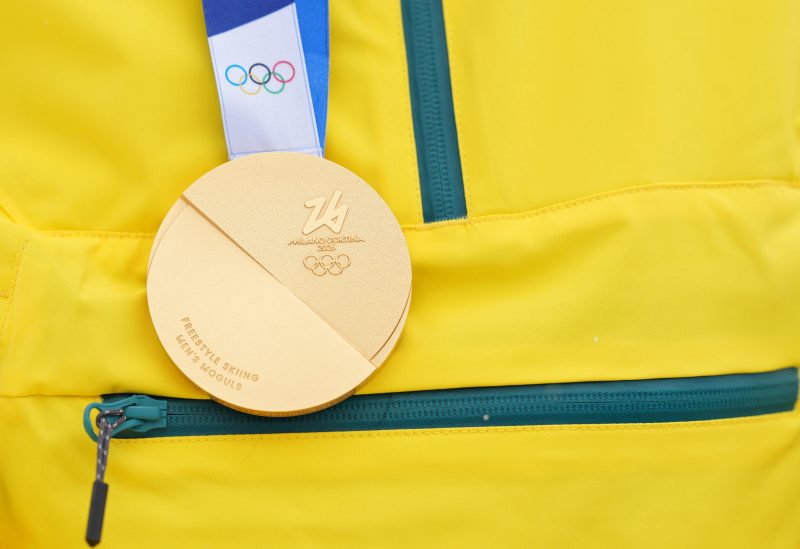
The medal ribbons are made of fabric, which isn’t very thick or wide. Medals from previous Games had loops or grommets to feed the ribbon through. But the medals at the 2026 Winter Olympics instead have a groove at the top. A metal pin resting in a loop at the bottom of the ribbon fits into the groove, securing the medal and ribbon in place.
But the pin has a spring mechanism, and when the medal or ribbon is pulled or jostled, it activates, and the two separate.
The Italian State Mint and Polygraphic Institute (IPZS) is a company ‘wholly owned by the Ministry of Economy and Finance,’ according to its website, and ‘a European leader in security printing solutions, digital identity, and coin minting.’ The IOC announced IPZS would craft the Olympic and Paralympic medals for Milano Cortina in 2025.
When asked via email about stories of athletes’ medals breaking during the 2026 Games, IPZS told USA TODAY, ‘The medals do not break. For a limited number of medals, the anti-choking safety device activates during celebrations by opening.’
‘Following reports of problems affecting a limited number of medals, the Organising Committee immediately examined the issue, working closely with the State Mint, which produced the medals.’
IPZS also told USA TODAY that, like Johnson, athletes whose medals come apart are ‘invited to return them through the appropriate channels so that they can be promptly repaired and returned.’
The company did not respond to USA TODAY’s questions about whether anti-choking features are common for Olympic medals, whether the feature was mandated by the IOC or Italian law, whether athletes must return their original medals in exchange for intact ones, what ‘solution’ IPZS identified for fixing medals nor what ‘channels’ athletes are using to get affected medals repaired.
IPZS did tell USA TODAY that the safety hook on Paralympic medals ‘will be enhanced’ ahead of those Games, which take place March 6-15.
Reach USA TODAY Network sports reporter Payton Titus at ptitus@gannett.com, and follow her on X @petitus25.