
This article discusses suicidal ideation. If you or someone you know is struggling or in crisis, help is available. Call or text 988 or chat at 988lifeline.org.
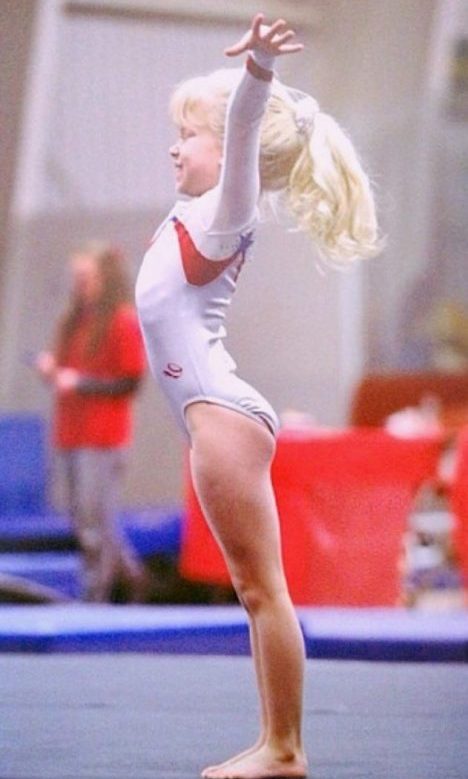
Anna Baker wanted validation.
It’s how she was programmed. In a way, it was how she survived.
“I was always kind of the awkward duckling,” Baker says. “Like friendly with everybody, but didn’t have a friend group, didn’t have close friends.”
But she had gymnastics, which she started at 4 or 5.
“When I think of my childhood,” she says, “all that I wanted, all that I thought kind of existed was the world of gymnastics. I thought that would be what my future would be guided by.”
Today, at 26, years removed from a series of injuries that forced her out of her sport, she still feels some of the pain. She trained or competed almost every day, with minimal breaks for an offseason.
“Your first love cuts the deepest,” she tells USA TODAY Sports. “And I think that for a lot of kids that is a sport, at least for a lot of kids that I grew up with, and it really is like a unique heartbreak and has an effect that has stuck with me for a really long time.”
Baker was not alone, as a teenager in this age of manic kids sports, and as a girl, who has a unique injury risk over a boy.
“Girls are at higher risk for overuse injuries in youth sports, period,” says Neeru Jayanthi, a sports medicine physician at the forefront of research on early sports specialization. “And probably serious overuse injuries as well, too.”
Jayanthi, the director of Emory Sports Medicine Research and Education in Atlanta, has a patient, Neva Talari, 14, an elite tennis player who came to him a little less than a year ago after back pain revealed stress fractures in her back.
“We went on a two-year spree without almost a break for her and she was actually taking off well with the results so she was motivated and we were motivated,” says her father, Suneel Talari. “We were thinking we should not hold back when the track is looking good.”
Still, Jayanthi has indicated Neva has a chance to make it back. Baker never could after her experience with specializing in gymnastics sent her down a slippery slope that is becoming more and more familiar as research continues on young female athletes.
Jayanthi says we need to accept girls’ greater injury risks, which will help us reduce them. USA TODAY Sports spoke with him, as well as Suneel Talari and Baker, about how their experiences with overuse injuries can help athletes and their parents.
What’s at risk for female athletes with overuse injuries?
They comprise more than half of the injuries to young athletes, medical research has found.
However, in a 2024 study of injured athletes aged 10 to 23, Jayanthi and his associates found the odds of sustaining an overuse injury as compared with an acute injury (such as an ankle sprain or concussion) was almost 50% higher in female than male athletes.
Such data isn’t widely known among youth sports parents.
Neva Talari, who plays out of Vander Meer Academy in Hilton Head, South Carolina, once played tennis every day, and for four and a half hours on Monday through Thursday, and then even more (five to seven matches) on weekend in travel tournaments.
Talari, 14, started noticing back pain last May. After resting for two weeks, she tried to play again and her pain got so bad she had to forfeit a match after the first set. She hasn’t played competitively since then.
“It’s a bad lesson for me,” says Suneel Talari, 43. “I never got injured despite playing a physical contact sport. I was thinking like you have to be extremely unlucky to get an injury because somebody like me never trained, never had a coach, never knew about injury management, could go on to play college soccer for a big school in India, and then never get injured.’
Anna Baker is an only child who grew up in Maine. Her mother, Michele LaBotz, is a sports medicine physician, who, like all of us, also was figuring out how to manage her budding athlete’s career.
What happened next blindsided them.
“Just as a preface, when we talk about, kind of best practice in terms of developing athleticism, particularly young children, gymnastics is an amazing sport and activity that way,” LeBotz told USA TODAY Sports in an interview. “When you think about all the sport options that are out there for kids, it’s the one that most closely replicates free play as you’ve kind of gone through the literature, in terms of pediatric development for both mental and physical development. Particularly, huge recreational gymnastic programs are fabulous in terms of developing general athleticism.
‘And so I’m not in any way, shape or form throwing gymnastics under the bus. This has just been our experience with the specialization process.”
Sports specialization drives increased injury risks, especially for girls
Sports specialization, according to medical experts, is the intentional and focused participation in a single sport for a majority of the year that restricts opportunities for other sports and activities.
It’s directed by a pull toward a singular activity for which your child demonstrates ability and passion, which raises the potential of them getting hurt.
LaBotz says girls face an increased risk of overuse injuries, in part, because they have a higher prevalence of REDs, or a syndrome of impaired physiological and/or psychological functioning due to inadequate energy intake in relation to exercise energy expenditure.
Girls also generally possess less strength and less muscle mass than boys, while their bone density is lower, leading to increased risk of stress fractures.
Her daughter developed them in both her feet and elbows.
“They were honestly really validating,” Anna Baker says. “I think growing up as athletes, we very much look for physical wins. It needs to be something that you can see, whether it’s like a scoreboard or a new skill or a performance. When I would get those injuries and I would just keep training on them, that is when I felt probably the best about myself, being like, ‘Look, here’s the proof that I’m working really hard, and here’s the proof that I’m really strong.’ ”
She developed mysterious hip pain at 14. It was eventually revealed to be avascular necrosis (AVN), which occurs when the ball and socket in the hip loses its blood supply and the bone starts to die.
She had an initial surgery for AVN at Boston Children’s Hospital, but her hip continued to collapse. Her second surgery at Duke University took a fibula out of her lower leg and placed it in her hip for stability.
Her career was over, underscoring the ultimate risk of an overuse injury: Attrition from a sport.
If you choose to specialize in a sport, work backward from your goal
Jayanthi says the risks for overuse injuries are higher for girls who do individual technical sports, such as swim, dive, dance, tennis and gymnastics.
But he doesn’t discourage girls from specializing in sports. If you do, though, he says you need to monitor yourself through vulnerable periods and understand your goals.
For one, are you setting your sights on making a high school team or a college one?
“I recognize that getting on (at) a high school, in some communities, is not easy at all,” Jayanthi says. “We are forced to do it. So figure out when you want to peak in your training. You need to peak at 14 or 15, which means that if you backtrack it four or five years, you actually have to start doing some intensity in training about four years prior to that to get to that point. If you do it, put the best environment around you.
“At the end of the year, each season, do neuromuscular training, and look at your competition/training ratio, and try to get some free play in there, and build the resilience.”
If the goal is college, he says, “just recognize that, ‘Hey, look, let’s not push this girl out of it. Let’s just let her get through a little more maturity, and then go all in (at) 13, 14 or something like that, when their skeletons mature.”
And scale back dramatically when you get hurt. Jayanthi prescribed complete rest to Neva Talari for a number of weeks to heal her stress fractures in her back. She then implemented a 12-week transition plan. The first week, her father says, she played only an hour a day, adding a half hour per week without serves until the fifth or sixth week.
“It took 12 weeks for us to slowly take off,” her father says. “My goal for her is to definitely play in a really top school, like something like Stanford because she’s academically also very good. And she is like a 7.1 UTR (Universal Tennis Rating) now, despite not playing for lost 8 months.
“And for us to get into something like Stanford along those lines, she needs to be close to 10 UTR at a minimum, on the lower end. So my challenge there is I do not have liberty and luxury to have her play two different sports on two different days and then give only two days a week for tennis and expect her to get to 10 UTR when she is 17.”
Realize the importance of rest, and ‘free play’
Suneel Talari speaks with a tinge of caution. He knows he can’t afford for Neva to suffer the injury again, when her chances at a full recovery will be greatly reduced, if not extinguished, like Anna Baker’s were a decade or so ago.
“I don’t remember the last time I watched gymnastics,” Baker says. “There’s still like so many feelings and emotions and like a deep sadness of missing something.”
She wound up getting a hip replacement at around 20, but the hip got infected and she went into septic shock.
“I don’t really remember much, I was in and out of consciousness,” she says, “but they pretty much told my parents to plan for me to not make it through the night. And at the time it was COVID and I was an adult so I was in a cardiac ICU and they were not allowed there. So my parents were sitting at home alone, just getting phone calls and updates on what was going on.”
Baker has since struggled with pain medication abuse and suicidal ideation. She had an extended stay in a psychiatric unit.
She finds solace today with Pilates, which she says, through movements and muscle activation, replicate many similarities of gymnastics.
Her experience with Pilates is in the spirit of what we can do with our young athletes if they decide to specialize.
“Do something that involves motor development outside of your sport,’ Jayanthi says. ‘So if it’s not free play, then play another sport. If it’s not playing another sport, then get in an injury prevention, strength-training program. Not the type that just add more [load] and try to make you faster, ones that actually focus on strength and developing your body.”
Monitor your child’s adolescent growth spurt, when athletes are more susceptible to overuse injuries, and minimize high competition-to-training ratios.
We are considered low-risk or “load tolerant” athletes if our competition to training ratio is less than 1:3. We become a moderate risk when the ratio increases to 1:1 and high-risk when it’s greater than 1-1.
Find the spirit of yourself
Suneel Talari has trimmed the tennis schedule for his younger daughter, Rhea, 11, to two tournaments a month.
Rhea is adopting a training workload adjusted from five days a week, four hours per day, to four days a week.
He observes his daughters’ states after they have been playing for a few hours. Are they fatigued? Are they dragging?
“My goal as a parent is I want to see my kids be happy,” he says. “I want them to be happy in the sport we chose right now. I’m always looking for that happiness aspect.”
The aspect, though, can be broadened within us if we find it outside of our sport. It’s something with which Baker struggled.
The gymnasts with whom she trained had a better handle on that part of their lives.
“When they were injured, they were like, ‘Oh, I can hang out with my friends more. At least I get to go to this school activity (or) hockey game,’ ‘ she says. ‘When I got injured and was out for a significant period of time, I didn’t have any real peers to do it with, not being involved in anything other than gymnastics.
“I would tell younger girls you don’t have to prove your commitment to your sport by dropping everything else. You don’t have to say no to everything else to prove that that is important to you.”
And, she says, learn to give yourself breaks.
“Physical and mental breaks that are focused on recharging your body and your mind,” she says. “Whether that’s napping or a certain meal, a certain stretch, just figuring out how to have a good conversation within your mind, and then bringing it to others when necessary.”
Borelli, aka Coach Steve, has been an editor and writer with USA TODAY since 1999. He spent 10 years coaching his two sons’ baseball and basketball teams. He and his wife, Colleen, are now sports parents for two high schoolers. His Coach Steve column is posted weekly. For his past columns, click here.