
An orbital data center is not online. On October 1, 2026, a prototype satellite for Google’s Project Suncatcher reached orbit on a SpaceX rideshare and checked in. It is a radiation-and-heat test with a handful of chips and a power budget measured in kilowatts, not a facility Alphabet can book against this quarter’s capital spending. Friday’s investable event was on the ground.
Having lined the October 2 Nasdaq closes up against Super Micro’s August 11 earnings exhibit and its September 23 shipping release, the split is plain. Super Micro Computer closed at $43.69, up 4.22%, while the fiscal 2027 net-sales range it actually published remains $65.0 billion to $72.0 billion. Hewlett Packard Enterprise closed at $69.33, up 7.36%, which is the networking and server print. Alphabet Class A closed at $343.50, up 1.56%, and still below its September 30 close. A satellite photograph is not a revenue event.
The calendar is the part a launch photo leaves out. Super Micro’s “more than $60 billion in new orders” line, and the $65 billion to $72 billion fiscal 2027 guide, were stated on August 11, 2026. They were not a new October 2 filing. The Vera Rubin NVL72 shipping announcement is dated September 23. Friday was the session that re-priced that already-public book. HPE’s $1.2 billion Vultr order and its higher networking-growth range were presented at a September 30 investor day. Google’s October 1 note calls the satellite the first step in a research moonshot. Those are three different cash-flow stories.
Key facts
- Super Micro closed October 2, 2026 at $43.69, up 4.22% from $41.92, on 44,497,410 shares (Nasdaq, retrieved October 3).
- On August 11, 2026 the company guided fiscal 2027 net sales to $65.0 billion–$72.0 billion and cited more than $60 billion of new orders over the prior year (Exhibit 99.1).
- On September 23, 2026 it said Vera Rubin NVL72 racks were shipping: 72 Rubin GPUs and 36 Vera CPUs per rack, and 1,152 GPUs across 16 racks (PR Newswire).
- HPE closed October 2 at $69.33, up 7.36%, after a $70.29 high. The quote page still showed a 52-week range of $19.84–$67.10 (Nasdaq).
- On September 30 HPE lifted fiscal 2027 networking growth to the high teens–low 20s percent, from 14%–17%, and announced a $1.2 billion Vultr order (SiliconANGLE).
- Google said October 1 the Suncatcher prototype was operating as expected (Google Research). Ars Technica reported four TPUs, about one kilowatt, and ~15-minute runs (Ars).
- Alphabet closed October 2 at $343.50, up 1.56% on the day and $0.58 below the September 30 close (Nasdaq).
What Friday’s tape actually priced
October 2 was not the day these companies discovered artificial intelligence. It was the day desks marked three pieces of physical infrastructure that were already in primary documents. Super Micro did not make a 52-week high. Nasdaq’s quote page, retrieved October 3, still showed a range of $19.48 to $58.78. Friday’s $43.69 close sits inside that band. In the daily series from April 1 through October 2, the highest close was $50.17 on June 2, and June 3 still closed at $47.42.
The October 2 open was $42.775, the low $42.28, the high $44.585, and the close $43.69. An unverified print near $43.03 is not the close. Volume was 44,497,410 shares, against 26,504,280 on October 1. The shipping release hit PR Newswire at 9:05 a.m. Eastern on September 23, and that day’s close was $41.44, a dime under September 22’s $41.54. Friday was a second look, not the announcement session.
HPE was the cleaner price event. From the April 1 close of $23.98 to Friday’s $69.33, the stock rose 189% in this daily series, and October 2 was the highest close and the highest intraday print in the window. The prior high was $67.1008 on September 30, in line with the $67.10 top of the 52-week range Nasdaq was still displaying. Friday’s $70.29 high and $69.33 close cleared it. Investor’s Business Daily’s October 2 headline called it a record. The close and the range break are verified here; this piece does not audit every session back to the 2015 listing, because older Nasdaq windows returned no rows.
The afternoon tape was looser than the close. StockStory, timestamped 12:35 p.m. Eastern on October 2, said HPE had jumped 7.8% in the afternoon. That print sits inside the day’s range. The high of $70.29 was 8.8% above the prior close. The official close was 7.36%, or $4.75, on 29,092,160 shares versus 16,453,820 the day before. The figure that belongs in a headline is the close.
Alphabet is the control, and the detail is below. From September 30 to October 2 the Class A close went from $344.08 to $343.50. The sessions that actually re-priced hardware were the rack name and the network name. The ground-based squeeze was already visible in Nvidia GPU prices, up as much as 21% at Nebius and CoreWeave.
Quick take. Friday priced three clocks. Super Micro’s guide is seven weeks old and its shipping release is nine days old. HPE’s order is from September 30, and the price broke the published 52-week high on October 2. Google confirmed a prototype in orbit on October 1, and the stock did not re-rate.
Super Micro is shipping racks into an August guide
The document that contains the $65 billion figure is Exhibit 99.1 to the Form 8-K filed August 11, 2026, for the quarter and year ended June 30. Fourth-quarter net sales were $11.1 billion, against $10.2 billion in the third quarter and $5.8 billion a year earlier. Gross margin was 17.5%, against 9.9% and 9.5%. Full-year net sales were $39.1 billion, against $22.0 billion in fiscal 2025.
The outlook in that exhibit is the one the tape is still using. For the first quarter of fiscal 2027, the quarter ended September 30, 2026, Super Micro expected net sales of $14.5 billion to $15.5 billion. For fiscal 2027 it expected $65.0 billion to $72.0 billion. Liang’s “more than $60 billion” line is new orders over the prior year, plus record backlog, not fourth-quarter revenue of $11.1 billion and not a Vera Rubin-only purchase order.
“Our Total AI/IT Solutions strategy continues to deliver strong results, we added several hundred enterprise and other customers in the past year, generated more than $60 billion in new orders, and booked record backlog entering fiscal 2027,” said Charles Liang, founder, president and CEO of Supermicro.
That sentence is from the August 11 release filed with the SEC. Friday’s 4.22% move was the market trading the later shipping news against that book.
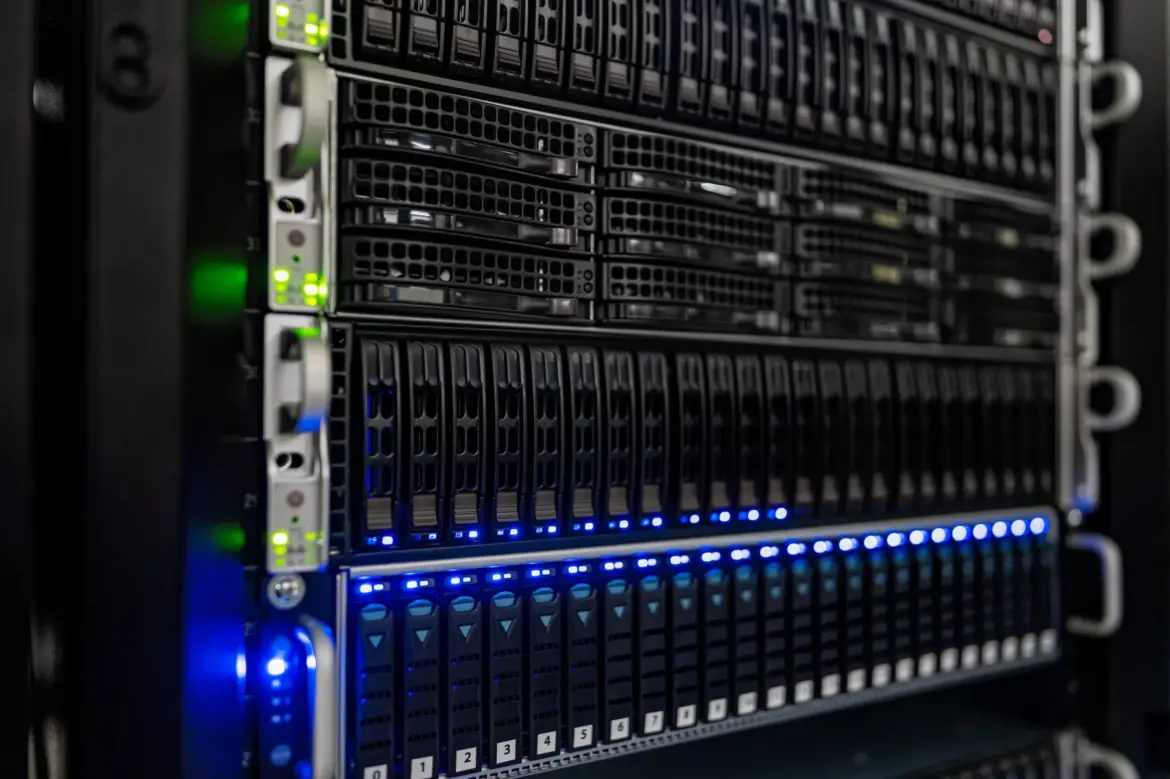
What changed on September 23 was the hardware. Super Micro said it is shipping NVIDIA Vera Rubin NVL72 racks on its Data Center Building Block Solutions platform with DLC-2 liquid cooling: 72 Rubin GPUs and 36 Vera CPUs in one rack, eighteen 1U trays tied by nine NVLink switch trays at 216 TB/s, 20.7 TB of HBM4 and up to 54 TB of LPDDR5X per rack. One scalable unit is 1,152 GPUs and 331 TB of HBM4 across 16 compute racks, with 1.8 megawatt in-row cooling units at N+1. The blueprint runs from 5 megawatts to gigawatt scale.
“We have spent years building the liquid-cooling stack, the manufacturing capacity, and the deployment teams for exactly this moment,” said Charles Liang, president and CEO. “Our customers can now order a Scalable Unit and receive production-ready systems with end-to-end integration, because we design and build every layer between the cold plate and the cooling tower.”
The September 23 statement does not raise the $65 billion to $72 billion range and does not name a new customer dollar figure.
The slope was already in the August guide. This next step is arithmetic, not a company cadence. At a $15.0 billion midpoint for the September quarter, hitting $65 billion for the year leaves about $16.7 billion a quarter for the following three. Hitting $72 billion leaves $19.0 billion a quarter. Both are above the $11.1 billion June quarter. Because the shipping release is dated September 23, only the last week of the quarter ended September 30 can contain revenue from a rack just declared shippable.
No fiscal first-quarter earnings 8-K was in the filing list reviewed October 3. The last earnings exhibit was August 11, then the August 31 Form 10-K. The earlier Super Micro bull-and-bear note is an August valuation frame, not a substitute for those filings. The live question is whether backlog converts near the June quarter’s 17.5% gross margin or slips toward the prior quarter’s 9.9%.
HPE is the networking print, and the percent is the close
HPE did not need a rocket. SiliconANGLE’s account of the September 30 networking investor day, and a StockStory note that attributed the order to Reuters, describe the same two facts. HPE raised fiscal 2027 networking revenue growth to the high teens to low 20s percent, from 14% to 17% earlier in September. It announced a $1.2 billion order from Vultr, its first for AMD Helios racks. SiliconANGLE reported that each rack uses six HPE Juniper Networking QFX5252 scale-up Ethernet switch trays to connect 72 AMD Instinct MI455X GPUs.
It is not Super Micro’s rack. Vera Rubin NVL72 is 72 Nvidia GPUs and 36 Vera CPUs on NVLink, liquid-cooled. The Vultr system, as SiliconANGLE described it, is an AMD Helios rack scaled up on Juniper Ethernet. Same headline category, different gross margin and different guide.
SiliconANGLE also reported Rahim saying Helios is more than a $1 billion networking opportunity over two years, with tray orders already above $200 million, and that fiscal 2027 would be back-end loaded. The same account put combined networking near $11.3 billion in fiscal 2026, from $9.3 billion in fiscal 2024. Those figures are targets and a reported order, not revenue.
“AI is reshaping the technology stack, making the network more strategic,” Rami Rahim, executive vice president and general manager of HPE Networking, said at the investor day, as reported by SiliconANGLE.
The price waited a day. HPE closed September 30 at $63.89 and October 1 at $64.58. The 7.36% break of the published 52-week high came on October 2. StockStory also cited a jobs print and a Citigroup target. Those secondary figures were not re-checked here. The corporate facts two outlets share are the growth-range change and the $1.2 billion order.
The percents differ because the setups differ. HPE had already rerated from $23.98 on April 1 to $63.89 on September 30, and Friday made a closing high. Super Micro rose from $22.51 to $43.69 over the same window, a 94% gain, but remained below its June 2 close of $50.17. One “AI server” factor misses that.
The constraint around both prints is still on the ground: AI optics names were already tight, and Oracle’s $7 billion Tencent compute agreement is a terrestrial contract. Neither needs a satellite.
Project Suncatcher is a heat test, not a data center
Travis Beals, senior director of Paradigms of Intelligence, wrote on October 1 that the prototype, built with Planet, had launched on Transporter-18 and was operating as expected. He called it the first step in a research moonshot and pointed to a paper in Joule. The post does not announce a product or a change in Alphabet’s capital spending.
The limits were described before liftoff. Ars Technica reported a refrigerator-sized satellite, called MVP, with four Google TPUs inside a Planet Labs spacecraft. Solar panels supply about one kilowatt, a figure Ars attributed to The New York Times, and Gemini test runs last about 15 minutes before the chips shut down so the radiators can catch up. CNBC confirmed the October 1 Transporter-18 launch and the contact check, without restating the chip count. Where this article says four, one kilowatt, or 15 minutes, the source is that pre-launch reporting, not an Alphabet financial line.
Google’s September 24, 2026 post says low-Earth orbit can offer up to eight times more solar power, that Trillium TPUs survived a proton-beam dose above a five-year mission in initial tests at the University of California, Davis, and that vacuum cooling is radiators, not air. It schedules a two-satellite laser test for 2027. That is later work, not four chips now.
Super Micro’s in-row cooler is rated at 1.8 megawatts. The satellite, on Ars’s figure, has about one kilowatt, and not continuously. Four TPUs in bursts do not replace 1,152 GPUs or an HPE switch order. FinanceFeeds described the plan before launch in the September 25 Transporter-18 note. October 1 added a contact check, not a capex line.
From September 30 to October 2, Class A shares fell $0.58, while Super Micro rose from $41.07 to $43.69 and HPE rose from $63.89 to $69.33. Buyers paid for racks and switches, not for four chips in orbit. The Gemini 4 Argon rate of $2 and $10 per million tokens is a software price, not a cloud region.
“Today, our prototype satellite for Project Suncatcher, built in partnership with Planet, launched into orbit aboard the Transporter-18 rideshare mission with SpaceX. Our team has confirmed contact with the satellite and it is operating as expected. This is the first step in a long-term research moonshot exploring whether space could one day host scalable machine learning infrastructure.”
Travis Beals, senior director, Paradigms of Intelligence, Google Research blog, October 1, 2026.
What has to happen next before any of this is revenue
For Super Micro, the next hard number is the report for the quarter ended September 30. The guide is $14.5 billion to $15.5 billion, and only the last week of that quarter can include a rack declared shippable on September 23. A print near $15 billion would still leave later quarters averaging about $16.7 billion to reach $65 billion and $19 billion to reach $72 billion. Friday’s headline does not pass that test.
For HPE, the test is whether fiscal 2027 networking growth lands in the high teens to low 20s, on the back-end-loaded schedule Rahim was reported to have flagged. A $1.2 billion order is not December-quarter revenue. The $69.33 close is the market’s view. The 7.8% afternoon print was not the close.
For Google, the named next step is a 2027 pair of satellites for laser links, plus whatever this prototype reports on heat and radiation. That can succeed and still leave this quarter’s Alphabet capex unchanged. Four TPUs on a one-kilowatt, 15-minute duty cycle are not why HPE closed at $69.33.
FAQ
Did Super Micro raise a $65 billion forecast on October 2?
No. The $65.0 billion to $72.0 billion fiscal 2027 net-sales range is in Exhibit 99.1, filed August 11, 2026. That filing also guides the quarter ended September 30 to $14.5 billion to $15.5 billion. October 2 was a trading session. The shipping news the tape used is the September 23 Vera Rubin NVL72 release, which did not change the range.
Was the $60 billion figure a fourth-quarter order?
No. On August 11, Charles Liang said Super Micro had generated more than $60 billion in new orders over the past year and held record backlog entering fiscal 2027. Fourth-quarter net sales were $11.1 billion. The exhibit does not identify the $60 billion as Vera Rubin orders. Treating the sentence as a new Friday purchase order double-counts an older book.
Did HPE close up 7.8% at a record?
The Nasdaq close was $69.33, up 7.36% from $64.58, with a high of $70.29. StockStory’s 12:35 p.m. Eastern note put the afternoon gain near 7.8%, which was not the close. The close and the high cleared the $67.10 top of the 52-week range Nasdaq still showed on October 3, and they were the highs of the April 1–October 2 series. Investor’s Business Daily called it a record. This article does not rebuild every session since 2015.
Is Google’s orbital data center operating?
No. Travis Beals wrote on October 1 that a prototype built with Planet reached orbit on Transporter-18 and was operating as expected. Ars Technica reported four TPUs, about one kilowatt of solar power, and Gemini tests of roughly 15 minutes because of cooling. Google’s September 24 post treats dozens of chips and a 2027 laser test as later work. That is a research satellite, not a commercial data center.
Why did Alphabet stock not jump with the launch?
Class A shares closed October 1 at $338.24, down 1.70% from $344.08, and closed October 2 at $343.50, up 1.56% but still under the September 30 close. The prototype does not add a cloud region or a disclosed capex line. The sessions that did reprice hardware were HPE, up 7.36% to $69.33, and Super Micro, up 4.22% to $43.69.
What is a Vera Rubin NVL72 rack, in Super Micro’s numbers?
The September 23 release specifies 72 Nvidia Rubin GPUs and 36 Vera CPUs in one liquid-cooled rack, eighteen 1U trays, and nine NVLink switch trays at 216 TB/s. Each rack has 20.7 TB of HBM4 and up to 54 TB of LPDDR5X. A scalable unit is 1,152 GPUs and 331 TB of HBM4 across 16 compute racks, with 1.8 megawatt in-row cooling units. Those are product specs, not revenue.