
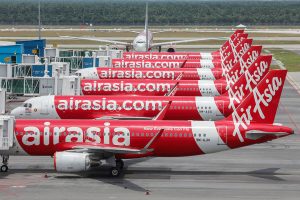
Malaysia Airlines parent says focus is on own growth, sidesteps AirAsia questions
KUALA LUMPUR — Malaysia Airlines’ parent is focused on its own growth plan, including an expected 8% capacity increase in 2027, its chief executive said, as the government weighs possible support for rival AirAsia.
Malaysia Aviation Group (MAG) CEO Nasaruddin A. Bakar last week told local media there had been no official discussions with the government about absorbing AirAsia’s domestic market share or taking over its aircraft.
In an interview with Reuters on Saturday, Mr. Nasaruddin was asked whether he was ruling out that informal or preliminary talks had taken place. “You need to ask other stakeholders on that one,” he said. “But I can say that the focus of MAG today is to focus on the business for Malaysia Aviation Group.”
The government asked Malaysia Airlines and Batik Air whether they could absorb AirAsia’s domestic share as part of scenario planning, Reuters reported in September, citing people with knowledge of the matter.
AirAsia is Southeast Asia’s largest low-cost carrier and controls about 60% of Malaysia’s domestic market, but the government has been monitoring its financial health and weighing potential support as the privately owned carrier grapples with high fuel prices and foreign exchange losses.
Asked whether any aircraft lessors had approached MAG about offering planes currently leased to AirAsia, Mr. Nasaruddin said discussions with lessors and financial institutions were centered on MAG’s own needs and existing orders. “We have not discussed anything outside of the scope,” he said.
CAPACITY GROWTH PLANS
MAG, which is owned by the government’s sovereign wealth fund, cut about 6% of its capacity in 2026, roughly 8,000 to 9,000 flights, to manage costs amid high fuel prices.
It is planning capacity growth of about 8% in 2027, Mr. Nasaruddin said, and could restore more capacity if that was justified by its financial performance and route profitability.
“The 2026 capacity adjustment is a tactical response to current market conditions and does not change our longer-term growth plans,” he said. “The projected growth in 2027 comes off a lower base following the capacity reductions implemented in 2026, so part of that growth reflects the normalization of capacity.”
Mr. Nasaruddin said fuel now accounts for more than 50% of operating costs, up from the usual 35% to 40%, adding that MAG has raised average fares by 20%, including fuel surcharges.
Air cargo remained a bright spot, Mr. Nasaruddin said, driven by AI-related semiconductor and component shipments on top of traditional e-commerce volumes. “People are really transporting goods, especially with regards to the small boxes and the semiconductor boxes,” he said, adding that he expected demand to stay strong into 2027 and beyond.
MAG operates three Airbus A330-200 freighters and carries belly cargo on its passenger planes. — Reuters